You’re not addicted to your phone. You’re addicted to the way your phone makes you feel — and that’s a more interesting problem to solve.
Something strange is happening in the wellness space. The same generation that built the internet, monetised attention, and designed apps to be as psychologically compelling as possible is now selling you a retreat from those very things. “Digital detox” has become a marketing category — weekend cabins without Wi-Fi, silent retreats, expensive screen-free resorts — marketed predominantly to the people who can least afford the time or money to use them.
Meanwhile, the actual problem — the daily, invisible drain of living inside screens for six to seven hours a day — continues largely unaddressed.
Most digital detox content online falls into one of three unhelpful patterns. The first is the panic piece: alarming statistics about screen time and anxiety stacked without context, designed to make you feel bad and click to the next article. The second is the aspirational escape narrative: someone spent a month in the mountains without a phone and found themselves. Lovely. Useless for the 99% of people who have jobs, families, and actual lives. The third is the shallow tips list: “put your phone in a drawer at dinner,” “use grayscale mode,” “try a 30-day social media break.” Surface-level interventions that address the symptom without touching the system.
This article does something different. It explains what excessive digital engagement actually does to your brain and nervous system, distinguishes the interventions that have real evidence behind them from the ones that are just good marketing, and gives you a practical framework for building a healthier relationship with technology — one that fits inside your actual life.
What Excessive Screen Time Is Actually Doing to You
Before the solutions, the honest diagnosis.
A 2024 Statista report found that the average daily screen time for adults globally is just over six hours — and US adults spend an average of seven hours per day in front of a screen. To put that in perspective: that’s roughly 44% of all waking hours. Most people, if they haven’t actively tracked this, would guess significantly lower.
The mental health consequences of this level of engagement are well-documented. Excessive screen time is linked to a 30% increase in anxiety and depression symptoms in young adults, and blue light exposure reduces melatonin production by up to 50% when using screens before bed.
But the mechanism goes deeper than just “too much time on screens.” Digital platforms, fueled by dopamine-driven feedback loops, evoke compulsive usage patterns — and this is not accidental. It is the result of deliberate design choices aimed at capturing and holding attention. Every notification, every like, every infinite scroll is an engineered trigger for the brain’s reward system. You’re not failing at self-control. You’re up against billion-dollar systems specifically designed to override it.
The result of sustained exposure is what researchers call continuous partial attention — a state where you’re never fully present anywhere, constantly half-monitoring the digital feed while half-engaging with whatever is in front of you. It’s cognitively exhausting, socially degrading, and almost entirely invisible while it’s happening.
The rapid, fragmented nature of digital content shortens attention spans, and multitasking between apps and notifications impairs cognitive focus — making sustained concentration difficult. These effects compound over time, creating a cycle of mental fatigue and emotional strain.
Understanding this clearly is the first step. You’re not dealing with a habit that needs breaking. You’re dealing with an environment that needs redesigning.
What the Research Actually Shows About Digital Detox
Here’s where most articles oversell their case — and where it’s worth being precise.
The evidence for digital detox is genuinely compelling, but it’s more nuanced than the “put your phone away and feel amazing” narrative suggests.
A 2025 study published in JAMA Network Open found that a one-week social media detox significantly reduced symptoms of anxiety by 16.1%, depression by 24.8%, and insomnia by 14.5% among young adults. Those are not small numbers for a one-week intervention. For context, many antidepressant medications show comparable effect sizes over similar timeframes — and a social media break has no side effects.
A 2024 study from the University of California found that participants who limited screen time for just one week reported a 25% decrease in anxiety levels.
Another study found that a two-week break from social media brought “reductions in negative feelings and stress, as well as increases in positive feelings, productivity, and confidence.”
Critically, individuals who participated in digital detox studies found the experience less challenging than anticipated — with a significant number reporting sensations of pleasure and relief, while the majority managed to adapt quickly to reduced internet availability.
There’s also an important caveat worth naming: digital detox interventions may alleviate depression and problematic internet use, with individuals who have higher baseline symptom severity appearing to derive higher benefits — but the impact on broader outcomes such as life satisfaction and overall wellbeing remains variable. In other words: the more distressed you are by your digital habits, the more you’ll likely gain from changing them. Those who are already using technology fairly intentionally may see smaller effects.
The honest conclusion: digital detox works. But it works best as a shift in ongoing behaviour — not as a one-time event.
The Nature Connection: Why Going Outside Amplifies Everything
Disconnecting from screens and reconnecting with nature are usually treated as separate ideas. They’re not. They’re two sides of the same coin — and combining them produces a stronger effect than either alone.

The brain operates in two competing modes when it comes to attention. Directed attention — the kind required for screens, email, decisions, and productivity — depletes. Involuntary attention — the soft, undirected awareness triggered by natural environments — restores. The reason a walk in a park feels different from sitting quietly in a room is that the natural environment is actively replenishing your depleted attention resources, not just pausing their drain.
According to the journal of Environmental Science and Technology, spending time in nature has been shown to reduce stress, improve mood, and enhance cognitive function. When you combine this with a reduction in screen stimulation, the effect compounds. Your nervous system isn’t just getting a rest from digital noise — it’s actively being restored by sensory inputs that your brain evolved over millions of years to find genuinely nourishing.
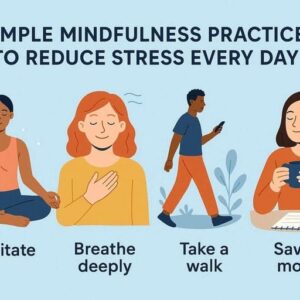
When combined with structured mindfulness techniques such as deep breathing, body scans, or open-awareness meditation, nature-based practices offer a lasting foundation for emotional balance and mental clarity — providing a powerful way to restore focus and resilience in an increasingly tech-saturated world.
Practically, this means that the most effective digital detox isn’t sitting at home staring at the wall instead of your phone. It’s replacing screen time with outdoor time — especially in natural or green environments. The substitution matters as much as the reduction.
A Framework That Actually Works: Graduated Reduction, Not Cold Turkey
The “30-day phone fast” article is everywhere. It’s also, for most people, a recipe for failure followed by guilt followed by unchanged behaviour.
Limiting recreational digital screen use increases self-reported overall mental wellbeing and mood — and scheduled screen breaks can lower digital eye strain and reduce mental fatigue, especially during work hours.
Here’s a framework built around sustainable behaviour change rather than dramatic gestures:
Level 1: Daily Micro-Detoxes (Start Here)
These are small, consistent reductions that build the habit of intentional usage:
- Morning phone delay: Don’t check your phone for the first 20–30 minutes after waking. This single habit protects the most neurologically receptive window of your day.
- Meal-time screens off: No phone at the table — breakfast, lunch, dinner. This recovers 30–45 minutes of genuine presence per day and consistently improves mood and relationship quality.
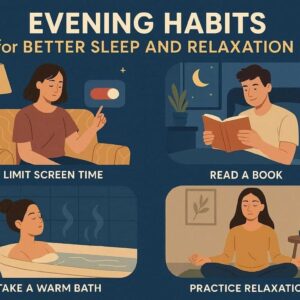
- Evening screen curfew: No screens 60–90 minutes before bed. Non-negotiable for sleep quality.
- Analogue alternatives: Replacing screens with paper for tasks like journalling or planning improves retention, attention, and creativity. A paper notebook for morning planning. A physical book in the evening. These aren’t nostalgic gestures — they’re neurologically different activities.
Level 2: Weekly Offline Windows
Once daily micro-detoxes are consistent, extend the practice:
- One screen-free evening per week: Not a full day — just one evening. Use it for cooking, walking, a conversation, a bath, a book. Notice how your nervous system responds by the second week.
- Outdoor time without the phone: At least two hours per week in a natural environment with your phone left behind or on silent in your bag. Digital sabbaticals of even 24–48 hours have been linked to lower stress levels, improved mood, and greater life satisfaction.
- Social media time limits: Set a daily limit (15–20 minutes per platform) using your phone’s built-in screen time tools. This is less satisfying than it sounds because the apps are designed to maximise engagement within any time window — but it breaks the reflex of endless scrolling.
Level 3: Extended Detox Periods
Once the habit infrastructure is in place, periodic longer breaks become not just tolerable but actively enjoyable:
- One full offline day per month — leave the phone at home, plan something physical and outdoor, notice what returns when you’re not managing a feed
- Offline holidays or weekends — even one or two per year creates a reference point for what restored attention feels like, which makes the daily habits easier to maintain
The FOMO Problem — and How to Dissolve It
Stepping away from social media can trigger anxiety about missing important updates or social events — a fear particularly strong among younger generations, with 60% of Gen Z reporting FOMO in a 2024 digital behaviour survey.
This is the most underaddressed obstacle in digital detox content. Telling someone to “just put the phone away” without acknowledging the social anxiety that generates doesn’t help.
The FOMO problem dissolves when you realise what you’re actually missing. Most social media “updates” are not events in your life — they’re events in other people’s highlight reels, curated for an audience, and designed by algorithms to feel urgent. When you step back and look at what you actually missed after an offline weekend, it’s almost always: nothing that mattered. The urgency was manufactured.
The antidote to FOMO is not willpower. It’s building a life offline that you genuinely don’t want to miss. When your evenings contain real conversation, real movement, real creativity, real rest — the feed becomes less compelling, not through discipline, but because you have better things to attend to.
What to Replace Screen Time With
This is the part most detox articles skip — and it’s arguably the most important. Rather than calling for the complete removal of digital technology, the focus should be on thoughtful and balanced engagement that emphasises human connection, creativity, and emotional strength.
Effective substitutions:
- Walking or outdoor activity — especially in green or coastal environments; the neurological reset is fast and measurable
- Physical creative work — cooking, drawing, writing by hand, gardening, building; anything that produces a tangible output through physical engagement
- Face-to-face social time — not arranged through an app, just showing up; the warmth and unpredictability of real conversation is something the feed cannot replicate
- Books — physical books specifically; the sustained, linear, immersive attention required by long-form reading is one of the few activities that actively rebuilds the concentration capacity that screens erode
- Rest without guilt — sitting with a cup of tea, looking out a window, doing nothing in particular; the discomfort of “wasted time” is one of the things the phone fills, and learning to tolerate it is part of the practice
The Bottom Line
Digital detox is not a new concept — it’s a continuation of an ancient human need to pause and reconnect. Even before digital devices shaped our lives, cultures around the world cultivated practices of stillness, attention, and balance.
You don’t need a Wi-Fi-free mountain cabin to start. You need a phone-free morning, an evening walk, and dinner without a screen. Do those three things consistently for two weeks, and your relationship with technology will begin to shift — not because you’ve restricted yourself, but because you’ve remembered what you were doing before.