
Forget the bubble bath. Real self-care is less photogenic — and far more effective.
Self-care has a reputation problem.
Somewhere between its clinical origins and its current Instagram incarnation, the concept got reduced to scented candles, face masks, and “treating yourself” to something expensive. The wellness industry runs approximately $1.8 trillion annually on this distortion — selling self-care as an aesthetic, a product category, a reward you purchase after a hard week.
The actual definition is far less glamorous and far more useful. Self-care refers to activities and practices that you engage in on a regular basis to reduce stress and maintain and enhance your short and long-term health and wellbeing. No purchase required. No photogenic ritual necessary. Just intentional, repeated behaviour that keeps your mind and body functional and resilient.
Search “self-care ideas” online and you’ll find a very specific type of content. Listicles with fifty suggestions, all presented as equally important. Sponsored posts where self-care happens to involve a particular brand of supplement or skincare. Trend roundups breathlessly announcing that “2025 is the year of holistic self-care” — as though the concept just arrived. What you won’t find is an honest answer to the more interesting question: what does self-care actually do to your brain and body, and which types produce the most meaningful return?
That’s what this article covers.
What Most Self-Care Articles Get Wrong
Before the ideas, a quick audit of the competition.
They conflate self-care with self-indulgence. There’s nothing wrong with enjoying a bath or a good meal. But when articles frame luxury as the primary vehicle for self-care, they create two problems: they imply self-care requires money, and they miss the point entirely. The most powerful self-care practices are free, unglamorous, and require only consistency.
They present every idea as equal. A typical “50 self-care ideas” article lists “drink water” alongside “book a spa day” alongside “start therapy” with the same visual weight and zero hierarchy. Not all self-care is created equal. Some practices address root causes of depletion. Others are pleasant distractions. Knowing the difference matters enormously when your time and energy are finite.
They treat self-care as reactive. Most content positions self-care as something you do when you’re already running on empty — a recovery mechanism. The research tells a different story. The stronger model from a 2024 ScienceDirect study illustrates that self-care can decrease stress, promote coping, and improve mental health — and that promoting self-care may be more effective in support interventions than trying to change coping. In other words, self-care works best as prevention, not cure. Build it into ordinary weeks, not just the ones that break you.
They skip the science entirely. A study from the National Institute of Mental Health found that 66% of people report that practising self-care makes them feel mentally stronger and more equipped to handle life’s challenges. But the why behind this — what self-care does neurologically, hormonally, and physiologically — almost never appears in popular wellness content. Without understanding the mechanism, you’re just following instructions.
The Foundation: Self-Care That Works at the Biological Level
These are the practices with the deepest evidence base — the ones that affect your nervous system, hormones, and brain chemistry directly. Everything else builds on this foundation.
Sleep as the Master Reset
Lack of sleep can lead to physical and mental fatigue, decreased productivity, and a weakened immune system — and about one-third of adults in the US report getting less than the recommended 7–8 hours of sleep per night.
Sleep isn’t self-care in the soft sense — it’s the biological process by which your brain consolidates memory, clears metabolic waste, regulates hormones, and repairs tissue. No other self-care practice compensates for its absence. You can meditate, eat well, and exercise consistently and still feel depleted if you’re chronically undersleeping.
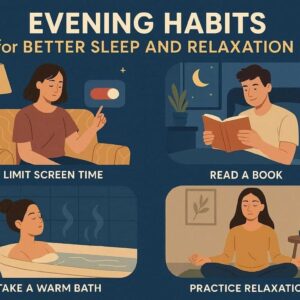
The practices that most reliably improve sleep — consistent wake time, no screens 60–90 minutes before bed, a cool and dark room — are all free. If there’s a single self-care investment worth making before any other, it’s protecting your sleep architecture. Getting enough sleep will help regulate your mood, improve brain function, and increase your energy to help tackle the day.
Movement as Medicine, Not Punishment
Exercise is one of the most studied and most effective self-care tools available. The evidence covers anxiety reduction, depression management, cognitive protection, and longevity — and the threshold for benefit is far lower than most people assume.

The key mindset shift: movement is not a form of punishment for eating, or a metric to optimise, or a performance to document. It’s a biological need. Bodies were designed to move, and they signal their displeasure when they don’t through low mood, poor sleep, brain fog, and chronic physical tension.
The best form of movement is whichever one you’ll actually do. Walking, cycling, swimming, dancing, yoga, gardening — all of it counts. Aim for 150 minutes weekly — and choose activities you enjoy. The enjoyment caveat isn’t a soft addition. Exercise you dread is exercise you’ll eventually stop doing. Enjoyment is a sustainability mechanism, not a luxury.
Nutrition Without the Rules
The relationship between food and mental health is more direct than most people realise. What you eat affects neurotransmitter production, blood sugar regulation, inflammation levels, and gut health — all of which feed directly into your mood, energy, and cognitive function.
But most self-care nutrition advice is either too prescriptive (specific diets, elimination protocols, supplement stacks) or too vague (“eat well, feel well”). The practical middle ground:
- Eat regular meals — blood sugar crashes are a reliable mood destabiliser that pass largely unnoticed
- Prioritise whole foods the majority of the time without making this a moral position
- Stay hydrated — dehydration impairs concentration and mood at levels most people never consciously register
- Notice the connection between what you eat and how you feel over the following hours — your body gives clear feedback if you pay attention to it
The food you use to fuel your body directly fuels your mind and mental health. This isn’t a metaphor — it’s biochemistry.
The Middle Layer: Practices That Restore and Regulate
Once the biological foundations are solid, these practices address the psychological and emotional dimensions of recharging.
Solitude Without Screens
There’s a specific kind of rest that doesn’t get discussed enough: cognitive rest. Not sleep — just the absence of input. No podcast, no scroll, no background noise. Just you, your thoughts, and whatever’s in front of you.
This is uncomfortable for most people, which is precisely why it’s valuable. The discomfort signals how rarely it happens — and how much your nervous system has been habituated to constant stimulation. Reading, taking a walk, sitting down for a meal, or just being still are examples that can help you recharge.
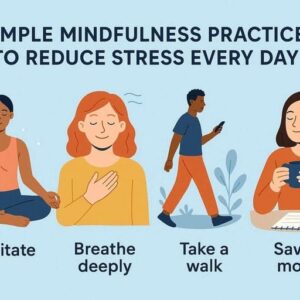
Even ten minutes of genuine quiet — a walk without headphones, a meal without a phone, five minutes of sitting with a drink before checking messages — begins to restore the attention resources that constant stimulation depletes. A 2021 study found that self-care in the form of mindfulness practices could increase job satisfaction and reduce the risk of burnout. Mindfulness, at its simplest, is just paying attention to what’s actually happening. No app required.
Creative and Physical Hobbies
Engaging in activities we enjoy can be a powerful antidote to stress and anxiety. When we immerse ourselves in a creative pursuit, such as painting, writing, or playing a musical instrument, we tap into a sense of flow and mindfulness — this allows us to disconnect from the worries and anxieties of daily life and experience a sense of calm and tranquility.
Hobbies that involve physical making — cooking, crafting, gardening, woodworking, drawing — are particularly effective because they engage a different cognitive mode from the analytical, verbal thinking that dominates most people’s working hours. Making something with your hands is a form of mental mode-switching that relieves cognitive fatigue in ways that passive consumption (watching, scrolling) does not.
The productivity pressure around hobbies — the idea that a hobby should produce something valuable or develop into a side income — actively undermines their restorative function. A hobby is most useful when it has no external purpose. You’re allowed to be bad at it. You’re allowed to stop. The value is in the doing, not the outcome.
Setting and Holding Boundaries
This is the self-care practice that appears least often in popular content — probably because it’s uncomfortable and can’t be packaged as a product.
It’s critical to schedule regular self-care time — plan time to do something that gives you joy and helps you recharge. If you’re feeling anxious, setting boundaries can help you feel safe and comfortable in your surroundings. Create a “no list” of things you know you don’t like or that you no longer want to do.
Boundaries aren’t about being difficult or withholding. They’re about recognising that your time and energy are finite resources — and that consistently giving them away without replenishment is a reliable path to depletion, resentment, and burnout. Over 60% of professionals report feeling “burnt out” due to chronic stress, according to a 2024 WHO study. Burnout is rarely caused by a single catastrophic overload — it’s the result of accumulated small agreements to give more than is sustainable.
The boundary that most needs setting in 2026 is with work: defined end times that are treated as non-negotiable, email that doesn’t exist outside of working hours, and the understanding that availability is not the same as productivity.
Social Connection as Active Self-Care
Self-care is often framed as solitary — something you do alone for yourself. Research increasingly complicates this picture. Strong and supportive relationships are fundamental to our mental well-being — they provide a sense of belonging, offer emotional support during challenging times, and contribute significantly to overall happiness.
Genuine social connection — not the performance of it on social media, but actual time with people you care about — is one of the most potent self-care tools available. The evidence on loneliness is sobering: social isolation has health consequences comparable to smoking 15 cigarettes a day. Reaching out to people, showing up for small gatherings, maintaining friendships through regular contact — these are not optional extras to self-care. They are central to it.
The Self-Care Practices Worth Being Sceptical About
Not everything marketed as self-care earns the label. A few things worth approaching with caution:
- Expensive supplements with minimal evidence — the supplement industry in the US generates $50 billion annually; the majority of products have far weaker scientific backing than their marketing implies
- Apps as a substitute for practice — a meditation app is a tool, not a substitute for actually meditating; tracking wellness metrics can create anxiety that undermines the goal
- Retail therapy — buying something as a mood regulation strategy creates a short dopamine spike followed by the original problem plus a purchase you may not have needed
- Self-care as avoidance — consistently using “self-care time” to escape from problems rather than restore yourself from engaging with them is a sign the practice has been co-opted
The test is simple: after this self-care activity, do I feel genuinely restored and more capable of engaging with my life — or just briefly distracted from it?
Building a Self-Care Practice That Survives Real Life
The most common failure mode in self-care is the “all or nothing” trap: elaborate plans that collapse under the first busy week, followed by guilt, followed by abandoning the plan entirely.
A more durable approach:
- Start with one practice, not ten. The person who walks for 15 minutes every day is doing more for their wellbeing than the person who attempted a 90-minute morning routine and quit by Thursday.
- Schedule it rather than fitting it in. Self-care that depends on finding spare time will consistently lose to everything else on your calendar. Treat it as a meeting you can’t move.
- Design for your worst week, not your best. What’s the minimum version of this practice that still delivers most of the benefit? Know that number and use it when life gets dense, instead of cancelling entirely.
- Remove the guilt. Self-care should not be something you force yourself to do, or something you don’t enjoy doing — self-care is meant to refuel you. If a practice consistently feels like a chore, it either needs to change form or be replaced with something that fits you better.
The Honest Bottom Line
Real self-care is not a treat you earn. It’s not a product you purchase. It’s not a weekend activity that compensates for five days of unsustainable living.
It’s the ongoing, largely unglamorous work of maintaining the system — your nervous system, your body, your relationships, your attention — so that the rest of your life is actually liveable.
Sleep well. Move regularly. Eat something real. Create something. Protect your time. Call a friend. Set the boundary you’ve been avoiding.
None of that photographs particularly well. All of it works.